Rainbow Mountain Peru, known locally as Vinicunca, is a striped mountain in the Vilcanota range, about three hours by road southeast of Cusco. Most visitors reach it on a full-day trip from Cusco, with a hike of 1.5 to 2 hours up to a viewpoint at around 5,000 m. The best time to go is the dry season, from April to October, when skies are clear and the colors look sharpest.
This guide covers everything you need to plan the visit: how to get there, why the mountain has so many colors, how hard the hike really is, how to avoid altitude sickness, what it costs and how it compares with Palccoyo, the quieter rainbow mountain nearby.
Rainbow Mountain Peru at a glance
| Detail | Information |
|---|---|
| Other names | Vinicunca, Montaña de Siete Colores, Mountain of Seven Colors |
| Location | Vilcanota mountain range, Cusco region |
| Summit altitude | 5,036 m (viewpoint often signposted at about 5,200 m) |
| Trailhead altitude | About 4,600 m |
| Hike distance | About 7 to 8 km round trip |
| Hiking time | 1.5 to 2 hours up, about 1 hour down |
| Travel time from Cusco | About 3 hours each way |
| Best season | April to October |
| Difficulty | Moderate to challenging because of the altitude |
Where is Rainbow Mountain and how do you get there from Cusco?
Vinicunca rises in the province of Canchis, in the same mountain range as Ausangate, the highest peak in the Cusco region at 6,384 m. The usual route follows the paved highway south from Cusco to the town of Cusipata and continues on a dirt road up to the trailhead at about 4,600 m.
With a guided day tour
This is how most travelers visit. Tours pick you up at your hotel in Cusco around 4:00 am, stop for breakfast in Cusipata, give you time for the hike and the viewpoint, serve lunch on the way back and return you to Cusco in the late afternoon. A good tour also carries emergency oxygen and a first aid kit, which matters at this altitude.
On your own
You can take public transport from Cusco to Cusipata and then a shared car to the trailhead. It is possible, but departures are limited, you need to leave before dawn and there is no one to help if you feel unwell. Once you add transport, meals and the entrance fee, the cost is usually close to a group tour.
Why is Rainbow Mountain so colorful?
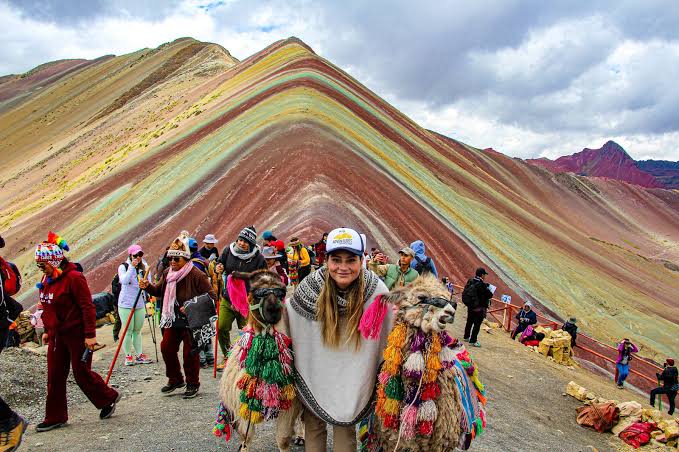
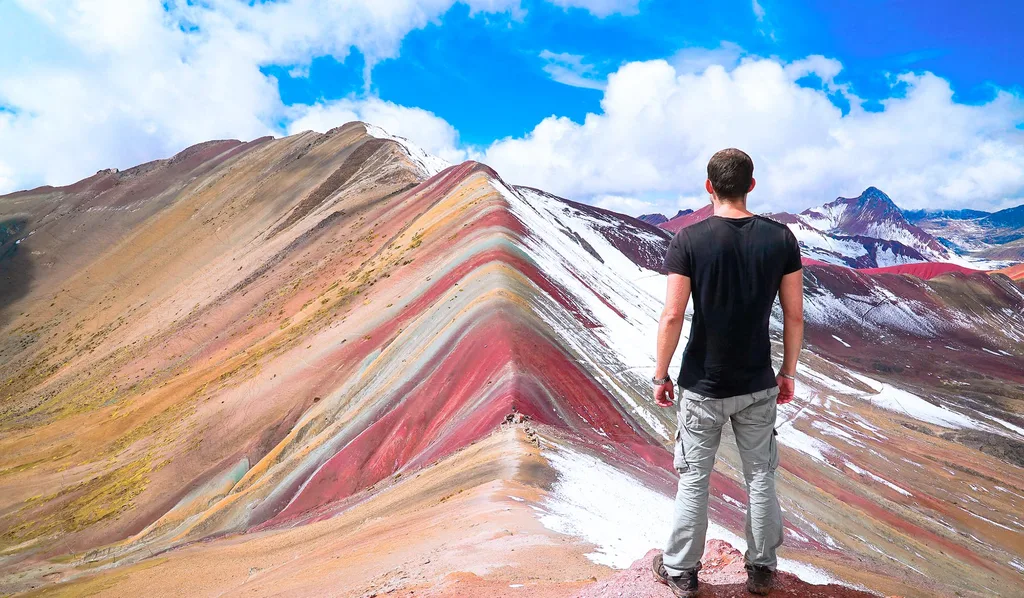
The stripes are layers of sedimentary rock, each one with a different mineral composition. Tectonic movements in the Andes tilted those layers, and erosion and the loss of snow cover left them exposed. This is what each color means:
| Color | What produces it |
|---|---|
| Red | Claystones and clays rich in iron |
| Pink | Red clay, mudstone and sand |
| Mustard yellow | Calcareous sandstone with sulfur-rich minerals |
| Green | Phyllites and clays rich in iron and magnesium |
| White | Quartz sandstone and marl rich in calcium carbonate |
| Earthy brown | Fanglomerate, a rock rich in magnesium |
The colors look brightest on clear mornings and right after light rain, when the rock is damp. Midday light and heavy cloud make them look flatter.
How high is Rainbow Mountain, and will the altitude affect you?
The peak of Vinicunca is commonly listed at 5,036 m, while many operators round the visitor area to about 5,200 m. Either way, you will be higher than the summit of Mont Blanc and about 1,600 m above Cusco, which sits at around 3,400 m.
Signs of altitude sickness
Headache, shortness of breath, nausea, dizziness and unusual tiredness are the most common symptoms. Mild symptoms are normal at this height, but a strong headache that does not ease, confusion or vomiting means you should stop climbing and tell your guide.
How to reduce the risk
- Spend at least two or three days in Cusco or the Sacred Valley before the hike.
- Avoid alcohol the night before and drink plenty of water.
- Walk slowly from the very first minute, even if you feel strong.
- Try coca tea at breakfast, a local habit many travelers find helpful.
- Ask your doctor about altitude medication before your trip, especially if you have heart or respiratory conditions.
The Rainbow Mountain hike: distance and difficulty
The trail is wide, well marked and not technical. The first half climbs gently along a valley where local families herd llamas and alpacas. The last section, just below the viewpoint, is short but steep, and this is where most people feel the altitude.
If you need help, horses are available at the trailhead for part of the ascent, usually for about S/70 to S/90 paid in cash to local handlers. The final stretch to the viewpoint is always on foot.
A typical day on a guided tour looks like this:
- 4:00 to 4:30 am: hotel pickup in Cusco.
- 7:00 am: breakfast in Cusipata.
- 8:00 am: arrival at the trailhead and briefing with your guide.
- 8:15 to 10:00 am: hike to the viewpoint.
- 10:00 to 10:45 am: photos and views of the colored slopes and Ausangate.
- 11:00 am to 12:30 pm: optional Red Valley and descent.
- 1:30 pm: buffet lunch in Cusipata.
- 5:00 to 6:00 pm: return to Cusco.
Is the Red Valley worth adding?
Yes, if you still have energy after the viewpoint. The Red Valley is a wide basin of deep red hills next to Vinicunca, reached in about 30 extra minutes on foot. It is quieter than the main viewpoint, and many hikers find it just as impressive. The entrance is paid separately in cash, so carry soles.
Rainbow Mountain vs Palccoyo: which one should you choose?
Palccoyo is another colorful mountain in the same range. It has become a popular alternative for travelers who want the colors without the effort and the crowds.
| Feature | Vinicunca (Rainbow Mountain) | Palccoyo |
|---|---|---|
| Top altitude | About 5,036 to 5,200 m | About 5,000 m |
| Hike | About 7 to 8 km round trip | About 4 km round trip |
| Hiking time | 3 to 4 hours in total | 1.5 to 2 hours in total |
| Difficulty | Moderate to challenging | Moderate |
| Crowds | High, especially from June to August | Low |
| What you see | One iconic striped ridge, Ausangate and the Red Valley | Several colored ridges and a stone forest |
Choose Vinicunca if you want the famous view and a real hiking challenge. Choose Palccoyo if you travel with children or older relatives, have little time to acclimatize or simply prefer a quieter place.
Rainbow Mountain weather and the best time to visit
The weather changes quickly at this altitude. Early mornings are often below freezing, daytime temperatures usually reach between 5 and 15 °C on clear days, and the wind at the viewpoint makes it feel colder.
- April to October (dry season): clear skies, firm trails and the brightest colors. June to August is the coldest and busiest period.
- November to March (rainy season): mud, low clouds and occasional snow that can cover the stripes. Tours still run, and you will meet fewer people on the trail.
For the best balance between weather and crowds, aim for May, September or early October.
How much does a visit to Rainbow Mountain cost?
Our Rainbow Mountain tour from Cusco includes hotel pickup and drop-off, transport, a professional guide, breakfast, buffet lunch, the entrance ticket, a first aid kit and emergency oxygen. The group service starts from USD 55 per person (minimum 4 travelers), and the private service from USD 95 per person (minimum 2 travelers).
On the day, bring cash in soles for:
- The Red Valley entrance, if you add it.
- Horse rental, if you need it.
- Toilets along the trail and snacks sold by local families.
- Tips for your guide and driver.
If you travel independently, you will also pay the Rainbow Mountain entrance fee in cash at the trailhead.
What to wear and pack
- Hiking boots or sturdy shoes with good grip.
- Thermal base layer, fleece and a warm down jacket.
- Wool hat, gloves and a buff or scarf for the wind.
- Rain jacket or poncho, even in the dry season.
- Sunscreen, sunglasses and a hat with a brim.
- At least 1 liter of water and a few snacks.
- Trekking poles for the descent.
- Passport or ID card and small bills in soles.
Is Rainbow Mountain worth it?
For most travelers, yes. Few places in the Andes combine this kind of color, a view of a 6,000 m glacier and a one-day hike from Cusco. Keep in mind that it is a long day, with around six hours in a vehicle and a short but demanding walk at high altitude.
It is worth it if you are already acclimatized, enjoy hiking and want one of the most photographed landscapes in Peru. Consider Palccoyo or another day trip if you have just arrived in Cusco, have heart or respiratory conditions or prefer to avoid crowds.
Frequently asked questions
How long is the Rainbow Mountain hike?
The round trip is about 7 to 8 km. Most people take 1.5 to 2 hours to reach the viewpoint and about 1 hour to come down.
Do I need a tour to visit Rainbow Mountain?
No, but it is the easiest and safest option. A tour handles the early transport, includes meals and the entrance ticket, and carries oxygen in case of altitude sickness.
Can you get altitude sickness at Rainbow Mountain?
Yes. The viewpoint is above 5,000 m, so mild symptoms are common. Acclimatizing in Cusco for two or three days and walking slowly are the best ways to prevent them.
How cold is it at Rainbow Mountain?
Early mornings are often below freezing, and the wind makes the viewpoint feel colder. On sunny days it can warm up to around 10 to 15 °C, so dress in layers.
Is Rainbow Mountain open all year?
Yes. Tours run in both seasons, although from November to March clouds or snow can hide part of the colors.
Which is better, Vinicunca or Palccoyo?
Vinicunca has the famous view and a more challenging hike. Palccoyo is shorter, easier and much quieter, with several colored ridges in one place.
Can I combine Rainbow Mountain and Machu Picchu in one trip?
Yes. Plan Rainbow Mountain after a few days in Cusco and then continue to Machu Picchu. Our Machu Picchu and Rainbow Mountain tour joins both in a single itinerary.